Outside on the MoonWhy are sharp turns tricky on the Moon?
Your grip and your speed help decide how wide a turn must be.
How does it work?
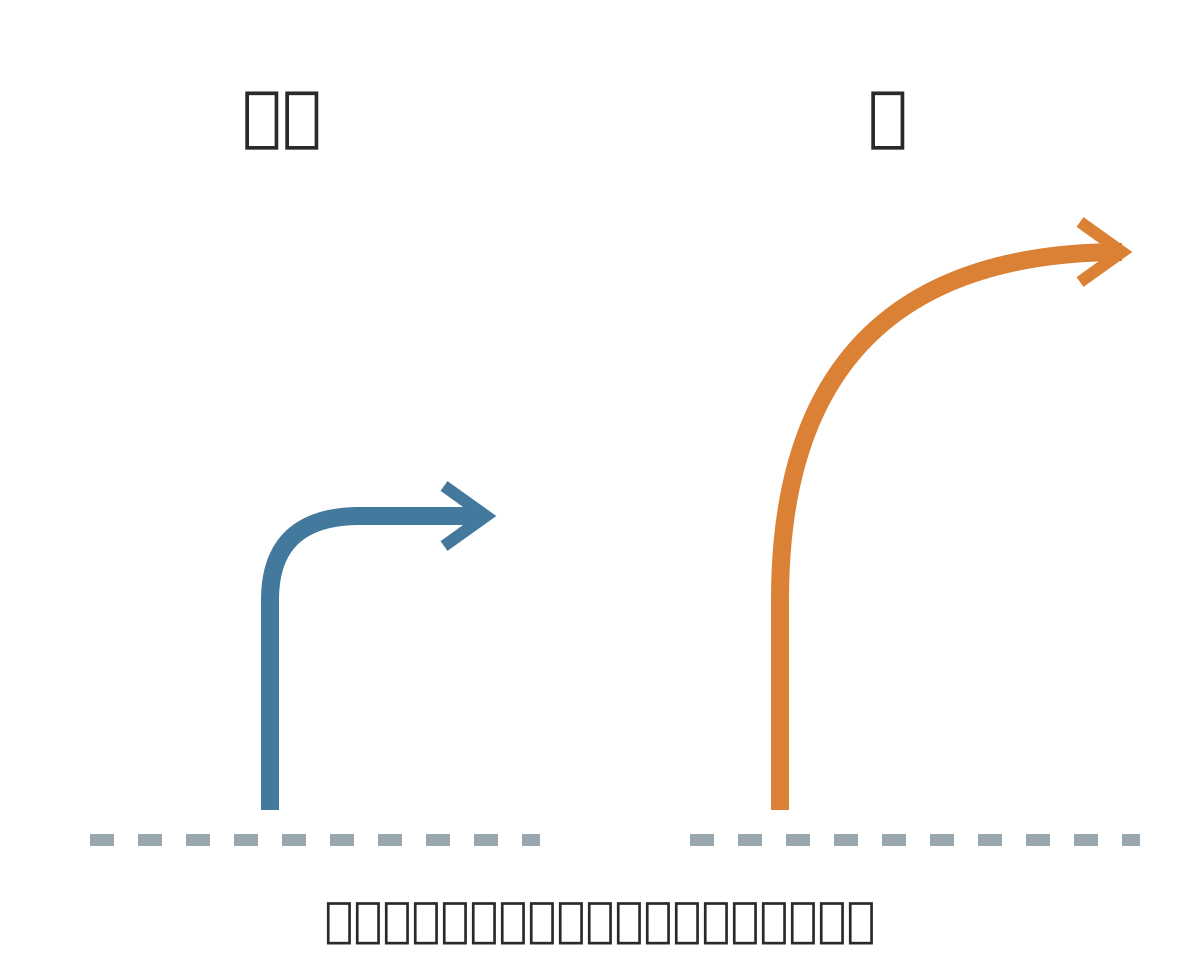
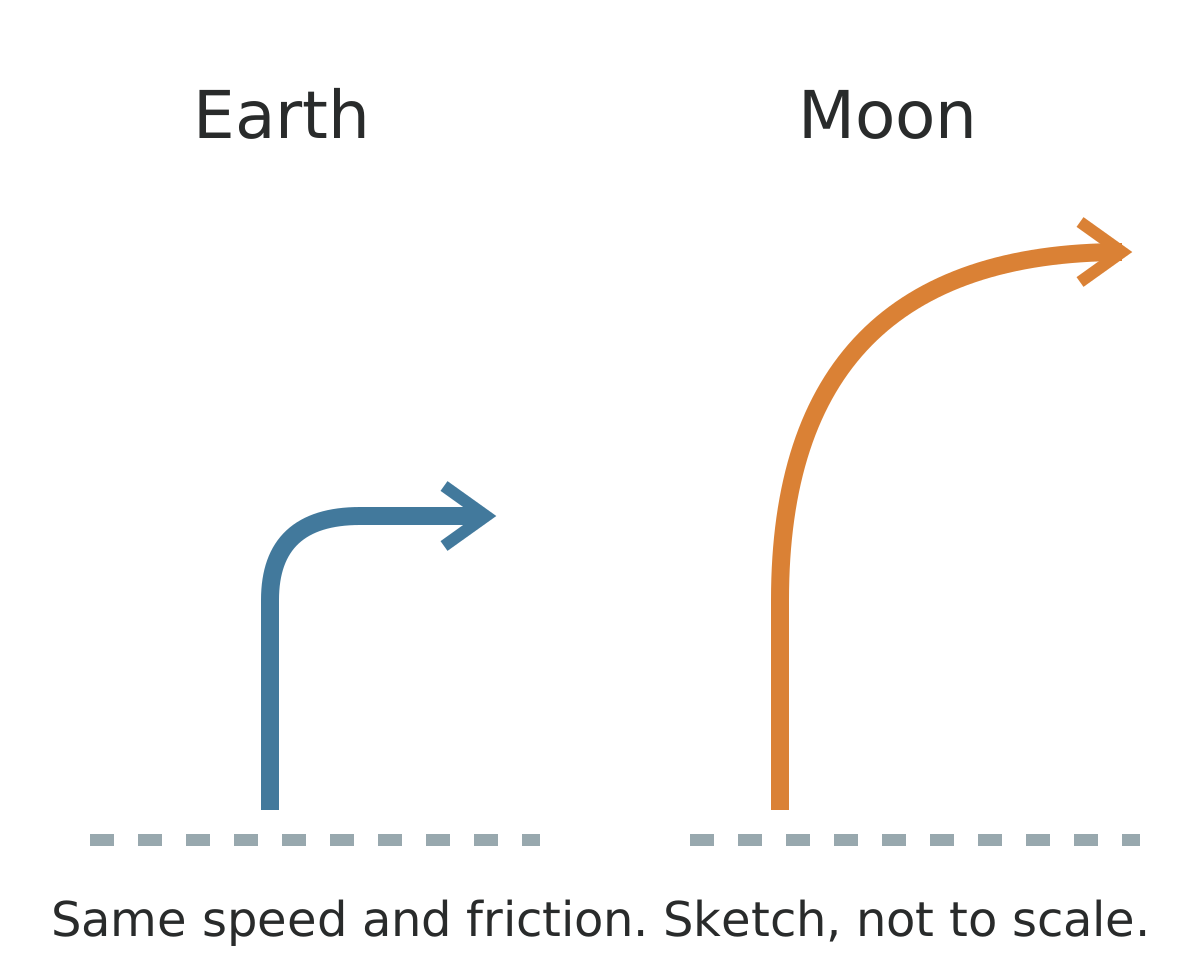
To change direction, you need a sideways push toward the inside of the turn. When your boots touch the ground, friction provides that push. On the Moon, you weigh less, but your mass stays the same. If your boots press down less, and the grip is otherwise the same, you need a wider turn at the same speed. Trying to turn too sharply can make you slide outward.
RememberGoing more slowly helps you turn more tightly. The Moon still has friction. You do not have to circle forever, and a player standing still is not impossible to catch.
Find out a little more
On a flat surface, a simple model gives the smallest turn radius as r = v²/(μg). Here v is speed, μ describes friction, and g describes gravity. With the same speed and friction, the Moon turn is about six times wider. Halving the speed makes the radius one-quarter as large in this model. At 2 m/s with μ = 0.6, the example radii are about 0.68 m on Earth and 4.1 m on the Moon. We chose 0.6 for the example; it is not a measurement of Moon boots and soil. Real running changes the push on each boot. The picture and footprint flower are sketches of the idea, not measured tracks.
Sources
Try a Moon comic